Cañar 2015

sunsetDear Friends:

We are back in Cañar after six months in Portland, and although I always claim to be one of those people unaffected by seasons, I have to say I really felt the contrast between our two climates this time. On January 5, in the winter dawn darkness, we left Portland, where days are short and gloomy, and 48 hours later we woke in our Cañar bedroom at 6:30 AM to sun streaming into our windows. Later that day, at 6:30 PM, we watched our first gorgeous sunset reflected on the Andes. I’ve come to fully appreciate what living on the equator means: twelve hours of sunlight, year-round.

Back in Guayaquil, where we landed after the usual 24-hour ordeal, we spent a steamy but pleasant day recovering with friends of friends from Canada who coincidently had arrived at Hostal Tangara hours before us: a visit to a museum, a walk and beers along the riverfront, our usual dinner of crab soup at the outdoor place (not as good as I remember). The next morning we hired a car and driver to bring us to Cañar, and in three hours flat we were at our gate, a guiltless luxury we allow ourselves as this is a trip that has taken up to six hours on the bus due to bad roads, terrible weather, frequent landslides, and long delays.m. arriving at house

The house is pretty much as we had left it, albeit with a scruffy yard (there’s been no rain for months) and dust and cobwebs inside, along with a sprinkling of feathers. As I open the door into the interior patio, a small bird flies out the narrow space between the glass structure and tile roof. Flies with confidence, as though it knew the way, not fluttering against the glass as birds usually do. This one is at home in this place, I think, confirmed when I find bird droppings in my studio and seeds sprinkled on my long table. Then I see the 100-pound sack against the wall, and I know this must be quinoa from the harvest of our back field after we left in July. It’s the long-held custom here for partidarios – those who sow a field they do not own, to share the harvest. So José María, who plants our field and watches our house, has left us our share of his first quinoa crop. No matter how many times we say we are only two people, and cannot consume our part of the harvest, we get only a friendly nod in return – and piles of potatoes, corn, beans, or peas. So we will accept this quintal of quinoa with good grace and give it away to all who come visiting, one small bag at a time.

quintal de quinoaquinoa close

While I open some of the 18 window shutters, Michael fires up all his systems: water, gas, hot water heaters, pump. Only thing not working is the phone, which means I have no Internet service. No matter; for the moment it’s nice to enjoy the quiet: no calls, no news, no radio, no TV, no traffic noises. Here’s Michael that first day, having taken off the rest of the shutters and looking pretty pleased with his mechanical triumph.

M in patio wideI never want to leave the house the first couple of days. After gloomy Portland, the bright sunlight hurts my eyes, and going into town requires finding a cap, sunglasses, sunscreen, jacket, extra sweater, cell phone. Then there’s the sudden change in altitude – 10,100 feet takes getting used to after six months at sea level. I feel lightheaded, with a slight headache for a couple of days. Also, I have a horror of running into someone I know well but whose name I’ve forgotten. For this I always bring last year’s agenda and, depending on where I’m going, look up people I might run into. So it’s easier to stay at home and unpack at a leisurely pace, cleaning and ordering as I go, with no interruptions other than Michael calling out the temperature and humidity on the new digital thermometer he’s brought and hung in our bedroom, punching a hole in the thick wall for an outside sensor. “It’s 59 degrees outside, 63 inside, humidity at 56%.”

In contrast, Michael charges out immediately, walking into town with his shopping bag to the MegaMarket, our little excuse for a supermarket. (Just as in Portland, within the first hour home, he jumps into the car and drives to Zupan’s, his favorite grocery.) He returns to report that shelves at the Mega are nearly empty. There is no granola, no wholegrain bread, and my acceptable $4 red wine from Argentina is no longer available. “Christmas and Año Nuevo holidays,” the owner’s son told him. “We’re cleaned out, but we’ll be restocking this week.”

By the second day I am forced out by the lack of phone and Internet service. Huffing up the dirt road to the top of our hill, I see that our street has a new name: Calle María Inga Gañalshug. There it is on a official ceramic plaque neatly attached to the street-level wall of a house above us. Who on earth was she, and why did they change our street from San José de Calasanz, named after the order of the priests who live across the streets? (Before that our official address was calle sin nombre. In any case, I’m pleased to live on a street named for a woman, in a country where nearly every street, monument, plaque, statue, building, and even towns, are named after men.street sign

At the phone company I’m told that the home number we’ve had for ten years has been changed. No explanation other than, “Oh yes, all numbers with 237 no longer exist. Your new number starts with 236.” And lack of phone service? “We’ll call the técnicos,” the white-haired woman I’ve known for years tells me. “What is your name, address, cell phone?” (Turns out the line had fallen to the ground.) And to restore my Internet service? “Well, for that you’ll have to come back with an oficio (letter of solicitation) and copies of your cedula (national ID) and carta de votación (card showing I’ve voted) and talk to the person in charge.  Some things never change.

On Sunday Michael goes to the market, taking with him the two big chef’s knives competing fish mongers have requested he bring from Portland. They each pay him, he goes shopping, and returns with his bounty. The cost of everything in the photo below: $8.00, and that includes a pound of langostinos. Michael’s so happy to be back in the land where three papayas cost a dollar and a pound of giant shrimp goes for $5.00. market visit $7

Finally, a great thank-you to all who donated to the Cañari Women’s Scholarship Fund this year in support of indigenous women earning university degrees. Please know that every dollar is appreciated. The mother of Luisa, our scholarship women in medical school in Riobamba, came by today to pick up her daughter’s monthly stipend. She told me she was illiterate, but that she and her husband have struggled to educate their four children. “Every one of them graduated from secondary school,” she said as she laboriously signed the receipt with a signature learned in literacy class.

If you didn’t get a chance to contribute and would like to, there is a PayPal “donate” button on the “SCHOLARSHIP PROGRAM” part of this website (at bottom of post). Also, our lovely tenant in Portland has offered to deposit any last-minute checks.

Again, Mil Gracias! And remember that I love hearing from every one of you.


Cañari Women’s Scholarship Foundation

scholarship meeting boost

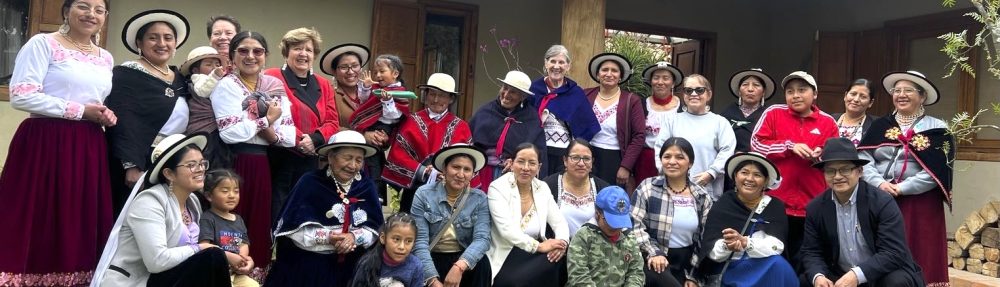
Dear Friends: Without looking at the calendar I seem to have an internal clock that tells me the day has come to write the annual fundraising letter for the Cañari Women’s Education Foundation. So let me start as I did last year, by introducing our scholarship women. The photo above was taken at our June meeting, right before I left Cañar, when the gathering brought together both our graduates and present scholars – an amazing group of women!

2015 marks the tenth anniversary of the scholarship program in Cañar, and we are thrilled to have twelve graduates and ten women presently studying (I count and see not all are present). I’m particularly pleased to report that every graduate is employed, almost all in their chosen professions and in their home communities: lawyer, agronomist, nurse, economist, dentist, psychologist, nutritionist, veterinarian, and more. In many cases they are the first indigenous woman in their fields.

overview meeting croppedOne purpose of the meeting was so our graduates could inform and inspire incoming and present scholars: to urge them to keep studying no matter what (marriage, childbearing, failing to pass courses); to keep their eye on the prize of becoming a professional indigenous woman; and to describe life in the post-graduate, working world. It was a wonderful celebration that began with a communal lunch, followed by testimonials (a tradition in Cañari meetings) and a few tears (also a tradition).paiwa sara meeting copy

Three years ago, President Correa’s government announced that higher education at state universities would become tuition-free. This was the good news. The “bad” news was that every student aiming for university had to pass an exam similar to the SATs in the U.S. The law took effect suddenly, and Cañari students, along with rural students everywhere in Ecuador, were ill-prepared to take these exams, as were their teachers to meet new instructional standards. Chaos ensued, with thousands of students failing to pass the exams, and more applying for “free” education than places were available.three in a row copy

Our Cañar board of directors considered options. Even the best students at local high schools were not getting into university. We thought about giving stipends for prep courses, but were stumped at the thought of trying to decide who should receive such help. But we did agree to give a scholarship to any woman applicant who was accepted into a university, rather than require that they complete the first year (our previous rule). For two years, as young women came knocking on my door, I listened and made notes as they told stories of failing the exam multiple times, feeling adrift and out of school when all they wanted was to continue studying. It was heartbreaking, but slowly the situation resolved: teachers learned to instruct toward the exams, students learned how to take the exams, and market forces weighed in with a new industry of test-prep courses of varying qualities named for Albert Einstein, Copernicus and Stephen Hawking.

This year we have ten women holding scholarships. Some had begun courses before the exam requirement and applied mid-stream in their studies. Others took the exam two or three times and finally got a score that allowed them to enroll. (Different degree programs require different scores.) And others benefited from the higher standards demanded of teachers (while raising their pitiful salaries so they didn’t have to work second jobs), and passed the exam in their last year of high school.

Vicenta & mom copy

Families are crucial to the success of our program, and they support their daughters in many ways: sending food, giving encouragement, babysitting. Most scholrship women are the first in their family to go beyond high school (or 8th grade) and you can imagine the tremendous pride at the moment of graduation. P1060156

All the women study full time at state institutions, most at the University of Cuenca or the Technical University in Riobamba. They live away from home in rented rooms with shared kitchens, coming home on weekends and holidays. The Foundation gives each woman a monthly stipend of $100 or $120 to help cover fees, room and board, travel and other expenses for the five years of most undergraduate degree programs. We also provide a one-time $500 to each woman for thesis and graduation costs, which means our support for each woman averages about $1500 a year, an amazingly low cost for a university education in any country. Since 2012 we also offer our graduates a stipend for master’s degrees.

A huge thanks to all of you who have supported the scholarship program over the years. We are proud that the Cañari Women’s Education Foundation is an official 501(c)(3) nonprofit in the U.S., which means your contributions are tax deductible. We have no administrative costs other than this mailing, so every dollar goes directly to the women. I would also like to thank our Portland board members Charlotte Rubin (our trusty treasurer), Francie Lindner and Laura Foster. In Cañar our board of five is elected from the women graduates, with a token (very good) man, the husband of one of our earliest graduates.

Please make your checks to CWEF and mail to 2020 SE Ash Street, Portland, Oregon 97214, and you may request a thank you letter with IRS receipt.

You can also donate through PayPal, by clicking the button here:


Best regards, Judy Blankenship,

President, Cañari Women’s Education Foundation

Amazing Amaranth

amaranth headLast week our consulting agronomist came by, took a look, and said our amaranth was ready to harvest. (The birds already knew this – they’ve been busy helping themselves the past couple of weeks). A slight shake of a catkin-like head brought down a cascade of tiny seeds (the little yellow specks in the photo above). And such tiny seeds! How many plants will it take to make a pound of this gluten-free- -pseudocereal-with-eight-essential-amino-acids, I wonder? It also makes me realize why amaranth is not a popular crop here. It takes the same amount of land, watering, weeding and fumigating that a crop of barley or wheat takes, with much less payoff (except nutrition-wise). Still, it has been an absolute delight these past six months to watch this beautiful plant go through its stages as we glanced out our windows, and I will certainly miss the sight of it next year, when ho-hum corn or potatoes will be back. Mike scarecrpw

So on a very cold day (about 50 degrees; the Andean winter is upon us) Jose María – who plants our field and whose harvest this is – came by and we followed the agronomist’s instructions: cut off the catkin-heads and put them in a sack, trying not to shake too many seeds onto the ground. Lay out the heads on a tarp for several days to dry in the sun. The three of us set to work with clippers, but we kept stopping to show off the most spectacular plants, and take photos. JM w headThat’s quinoa behind Jose Maria, which won’t be ready for a couple of weeks, if the birds leave anything. Too bad we’ll miss it. For that harvest the agronomist said he will bring a threshing machine. The amaranth was not enough to warrant a machine, and in fact, in only took us about an hour to finish the harvest.closeup harvest

sackful

Here’s what’s left of the field, with quinoa on the left and sangorache, another form of amaranth, on the right, still waiting for harvest.field stripped

While the seed heads await their shaking/threshing.

amaranth I promised Michael’s recipe for quinoa, but all I can say at this point is that he made paella (without measuring a thing) the famous Spanish dish, using quinoa instead of the usual arborio rice. The result was tasty, but not as good, I think, as with rice. But we’ll keep trying! Thanks again for all who sent recipes.paellaToday is our last day in Cañar for 2014. It takes about three non-stop days to strip the interior of the house of its character and color – hangings, throws, pillows, rugs, blankets, bedding – wash and store everything in trunks and bags and big plastic containers in a storeroom. That’s my job, along with many trips into town to take care of last details, such as submitting a formal request to the phone company to reduce my Internet service for six months. (Didn’t get it right the first time; was sent home to compose another.) On the last day, I cover the bookcases, kitchen shelves, dining table and living room with cloths- old sheets and the like. Michael’s job is to shut down the mechanics of the house – pumps, gas, water, hot water heaters, espresso machine – and to put up the shutters that cover every window and door. The house grows dark, the only light from the interior patio. It’s time to leave.

laundry patioP1060151

And some final farewells, one from Mama Michi and her daughter Mariana, one of our scholarship women who graduated yesterday from the University of Riobamba in public health.P1060157

Our final act is rather ignominious: we call a taxi to take us to the Pan American, where we stand beside the road with our bags, waiting for bus to Guayaquil to pass by. Others are waiting too, and it’s sometimes a scramble to get on and find seats. If there are none, we scramble off and wait for the next bus. And if there are no buses, as happened one Sunday, we hire a taxi at the last minute. We’ve developed a technique: I jump on fast and grab the seats while Michael stays to see the bags stashed underneath by the driver’s assistant. Only then can we relax into the four-hour ride to Guayaquil, where we’ll get a midnight plane to Miami, then another to Chicago, then finally arriving in Portland 18 hours later.

It’s been extremely cold and windy in Cañar these past couple of weeks, and we can’t wait for a Portland summer. Regards to all, until next January (unless I get inspired to write about Portland). In the meantime, I invite all to stay in touch.

Guayaquil airport, 8:10 PM, June 24, 2014.