 Dear Friends:

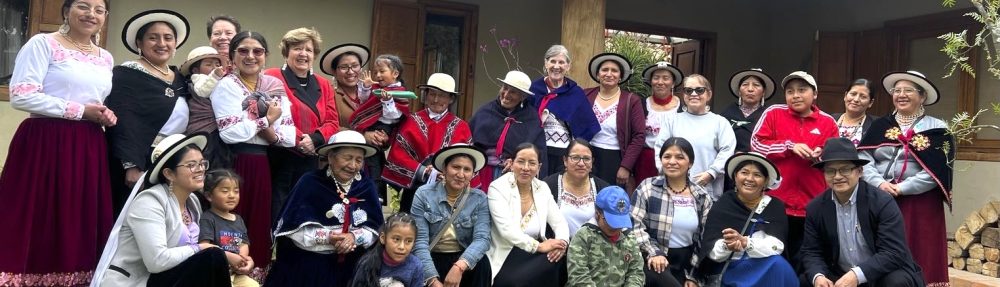
Today (well, two days now) is December 21, the shortest day of the year for most of you, but here in the Southern Hemisphere the solstice marks the beginning of summer. According to the ritual calendar of the Cañaris, Kapak Raymi is the second in the cycle of four raymis that mark the agricultural year that began in September with the planting of the crops. An intern from Oregon State University, Buddy Terry, and I spent a seven-hour day documenting the Kapack Raymi celebrations at a large school in Quilloac, sharing a lunch of guinea pig, walking a few miles, and shooting hundreds of photos and hours of video. We began with a morning outdoor ceremony (pictured above) that was a mix of Inca lore, Cañari ritual blessings (guy on right in white), giggling Cañari princesses and voice-over announcements by school administrators. In the afternoon we photographed a procession from the church in town to the school, about 4 kilometers, that took several hours. Pase del Niño Viajero is a Catholic tradition introduced by the Spanish that re-enacts the journey of Mary and Joseph with baby Jesus through towns and villages. Over the years the tradition has become a mix of the sacred and profane, incorporating many aspects of commercial North American Christmas. There was Mary on her donkey with a baby-Jesus doll, and a king or wise man or two, on horseback.

 The rest of us walked, including these two little angels, along with anxious parents of near-toddlers dressed as santa clauses, campesinos with miniature live chickens, ballerinas, animals and more.

 The older kids brought up the rear, dressed as priests, shepards, princesses and, for lack of a better costume, boxed presents. As the afternoon wore on the sky grew darker, the clouds came down, the little ones grew tired and so did this photographer.
  By 5:30 we were back at the school, where the dancing and music and fireworks were just getting going, but it was cold and dark, and for me time to come home for a glass of wine, the fire, and Michael. Buddy packed up his gear and headed for Cuenca, happy with his first day of a two-month internship.
★ ★ ★ ★ ★ ★ ★
OK, Back to summer. It’s been in the high 60’s this week and everyone is complaining about the heat. Once you are accustomed to dressing in jeans, sweaters, jackets, boots and hat, with daytime temps in the low 60’s, having to peel off layers while sweating in the sun is a big bother. Being this close to the equator, our year-round twelve hours of daylight don’t vary much (we get an extra 15 minutes on December 21). But in the Andes “verano” or summer, means the dry season, or no rain. While in the coastal areas the solstice brings the rains, and so the season there is called invierno, or winter. Confusing. Our neighbors are complaining about this verano, as many have already planted crops. But until it rains they have to irrigate their fields with revolving access to water – about every two weeks. Our compadres planted this beautiful crop of fava beans in our back field before we came, and you can see the effects of regular irrigation.
 ★ ★ ★ ★ ★ ★ ★
 Some of you will remember we had a serious chimney fire a few years ago. Since then Michael has been musing on the problem that our fireplace was constructed without a clean-out door for access between fire box and chimney. Fireplaces are rare in Cañar, and ones that work even rarer – I’ve seen many an artificial flower arrangement sitting in the fireplaces of middle-class houses, while most country folk gather around the open fire in their kitchens on especially cold days. After we had a second, less-serious, fire a year or two ago, it was obvious we had to find a way to clean the soot and creosote from the fireplace flue without a clean-out door.
 So this year Michael brought a special wire brush from Portland – too small a brush, judging by the photo on right – and by coincidence the day he went up on the roof I was reading about a 19th-century occupational hazard of chimney sweepers called – horribly -soot wart, a squamous cell lesion that leads to testicular cancer. A Dr. Percival Potts in 1775 made the connection between the exposure to soot of chimney sweepers, often young boys 8-12 years sent up the chimneys wearing only trousers and shirt, and occasionally naked, and cancer in later life. Social reform came with the Chimney Sweepers Act of 1834. Well, Michael was not naked, nor did he go up the chimney, but he did build a special ladder to get onto the second level of the roof, where he had to remove all the delicate ceramic tiles before he could get to the chimney.


He kept a hose handy for the first couple of nights, knowing the debris had been dislodged from the chimney flue but caught on the interior smoke shelf. Again, a clean-out door would have prevented this problem, a solution that would require totally rebuilding the fireplace and chimney.
However, all’s well that end’s well – and so from the warmth of our fire to yours, we send fond Season’s Greetings!
Not sure if my comment field is working. If not, please send replies directly to me at: judyblanken@gmail.com.
PS: Cañar Book club will return in January.


